Books
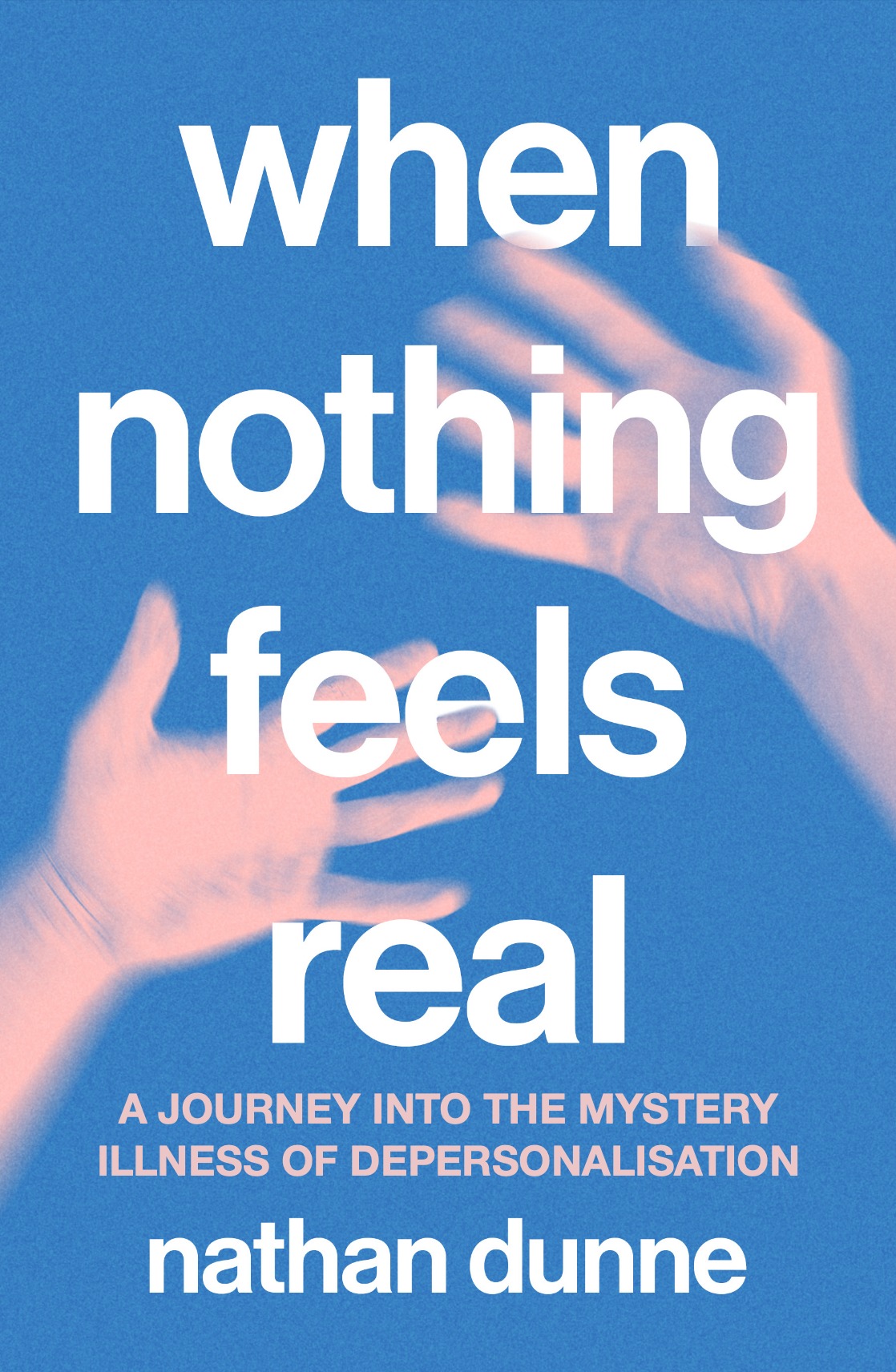
MEMOIR · MURDOCH BOOKS, 2025
When Nothing Feels Real
Journalist Nathan Dunne was living the life of his dreams in London until, one evening, he jumped into a lake for a swim. When he emerged, his identity was simply gone. He felt completely lost and in acute, inexplicable pain. He knew who he was supposed to be but had no connection to the person named Nathan. His memories were distant and separate, not his. Everything was unfamiliar. All he felt was terror.
This was the beginning of his experience with depersonalisation, a little-understood and on-the-rise mystery mental illness that causes a person to dissociate from their body and thoughts.
When Nothing Feels Real is Nathan’s quest to find his way through to the other side from the terrifying onset of his illness, the years of misdiagnosis and his long search for an answer and a cure. He expertly weaves in neuroscience, patient experiences and interviews with leading doctors in the field, using himself as a guide to courageously explore the personal, medical, psychological and philosophical issues raised by depersonalisation.
Read a major profile on Dunne’s life and work in The Guardian.
Listen to Dunne’s interview with Richard Fidler on ABC Conversations.
Paperback · 272 pages · Murdoch Books, 2025 · ISBN 978-1-76150-077-0
REVIEWS
‘This is an extraordinarily moving book by Nathan Dunne. One day, in his twenties, Nathan quite suddenly felt he was no longer in his body, and no longer recognised himself. This problem – known as “depersonalisation” – is surprisingly common, usually very disturbing, and fascinating. The book is an account of his experience and his attempt to make sense of it using the best science. I really recommend it.’
‘Utterly fascinating...thrilling to be given an insight into an experience of the world that is not just at the end of a particular spectrum, not just ‘ordinary’ pushed to an extreme, but which exists in what seems like a different category altogether.’
‘An excoriating but enormously educative read; I applaud the courage it so modestly records, the information it conveys, and the fact that it is sure already to be a significant work of advocacy for greater recognition and better treatment for those with the condition.’
‘An eye-watering and disorienting account of a condition that Dunne evokes so vividly…moving.’
‘His vivid descriptions of losing himself are graphic, visceral and, at times, alarming – powerful storytelling.’
‘In Nathan Dunne’s exquisitely written and deftly researched memoir, When Nothing Feels Real, Dunne takes us on his arduous journey to find a diagnosis and cure for this devastating illness. This book broke my heart but also gave me hope. There is so much yearning here, so much longing to live and to love and to be whole again. This is a brave and beautiful book.’
‘Vivid…compelling…we should be thankful for Nathan Dunne’s evocative, soul-baring book for giving the condition a voice.’
‘When Nothing Feels Real took a lot of courage to write. It captures the pain and mystery of depersonalisation as well as its art and science.’
‘This fascinating account charts Dunne’s recovery, his research into a little-understood condition and his discovery of a whole community of people who have experienced it.’
‘Jeepers! That’s some illness.’
‘I enjoyed this book and learned a lot from it. Dramatic and complex.’
‘This book is a vital and timely exploration of a poorly understood and devastating mental illness, and a powerful meditation on the fragility and resilience of selfhood. It will resonate profoundly with all those who question what it means to be ourselves, and what it is to be human.’
‘Dunne’s writing is extraordinary, original and rewarding.’
‘Nathan Dunne is a writer of such touching sympathies and affinities and generosity and pure gifts of language and mastery of both echoes internal and in the air.’
‘A very intimate account. Dunne manages to achieve quite a difficult feat; he describes this complex illness using rather simple language. In doing so, putting a spotlight on this much-maligned disease.’
‘This deeply personal account of depersonalisation is an enlightening, supportive work. Dunne covers current thinking in the fields of neuroscience, which makes it a valuable tool to understanding diagnoses and possible treatments.’